Does your domain name help you rank on Google? How to choose one when the good ones are taken
Your domain carries little weight on Google; what matters is that it is easy to remember and say, and that it has a clean history. A guide to choosing one, or changing it, even when the ideal .com is gone.
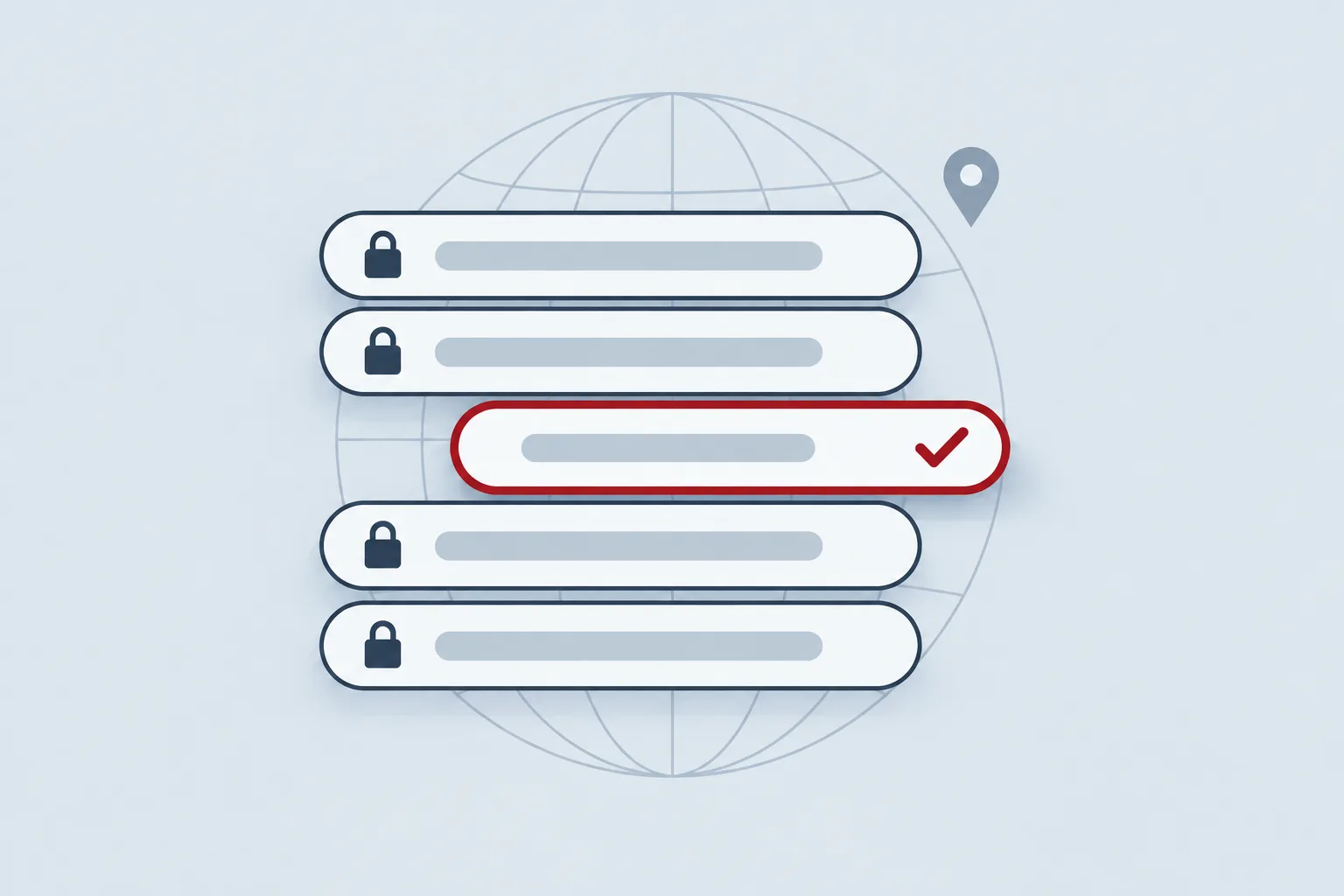
Your domain name has very little effect on SEO. Google says keywords in the domain barely affect rankings, and the extension (.com, .gt, .agency) only matters if you target a specific country, and even then it is a minor signal. What moves your rankings is your content, the technical health of your site and other sites talking about you. What does matter about a domain is that it is easy to remember and to say over the phone or in a WhatsApp voice note, that it fits your brand and that it does not carry a bad history.
If you feel like "all the good .com names are gone", that is good news: you don't need the perfect domain, just one your customers type correctly the first time.
How much does the domain weigh in rankings?
Google's SEO Starter Guide lists the domain name among the things not worth obsessing over:
- Pick the name that works best for your business: people will use it to find you.
- Keywords in the domain have hardly any effect on rankings on their own.
- The extension only matters if you target a country, and even then it is usually a low-impact signal.
First come pages that answer what your customers search for, a site without technical errors, your Google Business Profile and mentions on other sites. The same goes for getting recommended by ChatGPT, as we explain in how to show up in ChatGPT's answers.
Keywords in the domain: what changed in 2012
Years ago, a domain like [industry]-guatemala.com (an exact match domain, one that repeats the search term exactly) could climb Google's results almost on its name alone. That changed on 2012-09-28, when Matt Cutts, then head of Google's webspam team, announced a change to reduce low-quality exact-match domains in search results.
Today a keyword domain gains nothing from its keywords, and one stuffed with words and hyphens can look like spam to your customers. Google's John Mueller put it plainly on Reddit: there is no SEO bonus for having keywords in the domain, and a domain won't rank well just because it has them. His advice was to pick a name you can still use 5 or 10 years from now. A brand name has two advantages:
- It grows with you. If today you are
cheaptiresgt.comand tomorrow you also sell batteries and oil, the name no longer fits, and moving domains costs time and traffic. - People search for it directly. Your customers look you up by name, not by "cheap tires gt".
.com, .gt, .com.gt or a new extension
The extension gives Google a hint about which country your site targets, not a ranking boost. According to its documentation on multi-regional sites:
- Country-code extensions (ccTLDs), such as
.gtor.com.gt, signal that the site is meant for that country. - Generic extensions (gTLDs), such as
.com,.orgor new ones like.agencyand.shop, are not tied to any country. Google treats any extension that is not a country code as generic. - Some country codes are treated as generic because that is how people use them; Google's list includes
.co,.io,.ai,.meand.tv, among others.
Google also uses other country signals: hreflang (tags that mark the language and, optionally, the country of each version), local addresses and phone numbers, language, currency and your Business Profile.
| Your situation | What fits best |
|---|---|
| You only sell in Guatemala | .com or .gt/.com.gt. The .gt reinforces the local signal; the .com is what most people type out of habit |
| You also sell in other countries | .com or another generic extension, with sections per country or language |
| Your name is taken on .com | .gt or .com.gt if you sell in Guatemala, or a new generic extension that fits your brand |
Our own case. Our domain is zyncro.agency. The .agency extension is a new generic TLD: Google treats it like .com, so it neither helps nor hurts us. What places us in Guatemala is our content (we write for Guatemalan businesses), the Guatemala address in the site's structured data and our company profiles; hreflang tells Google which version is Spanish and which is English. The real cost is habit: when we say it out loud, we have to spell out "dot agency".
Does an older domain rank better?
No. When asked whether domain age affects rankings, Mueller answered with a simple "no" (2017-04-12). What helps sites that have been online for years is the content and links they have built up, not the registration date.
Watch the history: expired and second-hand domains
Here is the real risk. Google has an expired domain abuse policy, announced on 2024-03-05: buying an expired domain and using it to manipulate rankings with low-value content, riding on the previous owner's reputation. Using an old domain for a new, original site is fine, but a second-hand domain can come with spam links or a penalty.
Before buying one that has existed before:
- Look at its past on the Wayback Machine. If it was a casino, a pill shop or an ad-filled site in another language, walk away.
- Search
site:[domain]on Google. Odd pages or unrelated topics are a bad sign. - Check who links to it with a backlink tool (Ahrefs, Semrush or similar). Lots of links from junk sites are another red flag.
- Verify it in Search Console as soon as you own it and check the Manual actions report and the Security issues report. A manual action has to be fixed and followed by a review request.
What to do when the name you want is taken
Some ways out:
- A short verb:
hola[brand].com,get[brand].com,try[brand].com. - The country or city:
[brand]gt.com,[brand]guatemala.com,[brand]xela.com. - Your industry:
[brand]dental.com,[brand]insurance.com. - Guatemala's extension:
[brand].gtor[brand].com.gt. - Another generic extension that suits your business.
And for any option:
- No hyphens or numbers. You end up saying "with a dash" or "the number 2", and people get it wrong.
- Short and easy to pronounce, avoiding letters that sound alike (in Spanish, b/v, s/c/z, ll/y).
- Run the phone test. Read it to three people over a call or voice note and ask them to type it. If anyone gets it wrong, keep looking.
- Check the trademark. Search Guatemala's Intellectual Property Registry (Registro de la Propiedad Intelectual, RPI, part of the Ministry of Economy) to make sure no one has registered that name in your industry, and consider registering yours.
- Check social media. Make sure the same handle is free on the networks where your customers are.
Buying the domain from its owner
If the domain is registered but unused, you can offer to buy it. Use an escrow service, which holds the money until the domain is in your name; never wire money straight to a stranger. Confirm the seller actually controls the domain, check that the name is not someone else's registered trademark, and set a ceiling before you negotiate: a good variant ranks just as well.
Where to register a .gt domain
.gt domains are managed by Universidad del Valle de Guatemala, according to the IANA root zone database, the body that coordinates internet extensions. Its registration site is www.gt, where you can check the available options (.gt, .com.gt, .org.gt and others), requirements and current fees.
If you already have a domain and want to change it
A domain change can cost you rankings for a while, especially if it is done badly. Google warns that visibility may fluctuate during the move. The steps:
- List all your URLs and where each one goes on the new domain.
- Redirect page by page with permanent (301) redirects, not everything to the home page.
- Verify both domains in Search Console and use the Change of Address tool.
- Submit the new sitemap and watch indexing over the following weeks.
- Update everything that points to the old domain: Business Profile, social media, directories, email signatures and printed material.
- Keep the old domain and its redirects; Google recommends at least one year.
Don't switch just to get a domain "with better keywords". It may be worth it if your current one is hard to say, has a bad history, clashes with a registered trademark or no longer reflects what you sell.
Several domains pointing to the same site
Owning several domains that redirect to your main one is useful for brand protection: common typos, the other extension (.com and .gt) or your old name after a change.
What it does not do is add rankings. With a permanent redirect, Google treats the destination as the main page and shows that one in results, according to its redirects guide. Buying best-[industry]-guatemala.com and redirecting it will not rank you for that search.
Domain checklist
| Question | Yes / No |
|---|---|
| Is it easy to understand when read out over the phone or in a voice note? | |
| Is it short, with no hyphens or numbers? | |
| Does it match your brand or is it easy to remember? | |
| Will it still work if you expand what you sell? | |
| Does the extension fit your market (Guatemala or other countries)? | |
Did you check its past on the Wayback Machine and with site:? | |
| Did you confirm with the RPI that it is not someone else's trademark? | |
| Are the handles free on your main social networks? | |
| Did you secure common typos or the other extension? | |
| Is it registered to your company, not to the agency that built your site? |
Frequently asked questions
Does a domain name affect SEO?
Very little. Google says keywords in the domain barely influence rankings and that the extension is only a minor country signal. What weighs most is content, the technical health of the site and mentions on other sites. Choose a domain that is easy to remember and to say out loud.
Should I use .gt or .com?
If you only sell in Guatemala, both work: .gt reinforces the country signal and .com is what most people type from memory. If you sell, or plan to sell, in other countries, a generic extension like .com is the better fit. Ideally, secure both and redirect one to the other.
Will I lose rankings if I change my domain?
You may see a temporary drop while Google processes the change. You can reduce it with 301 redirects from each page to its equivalent, the Change of Address tool in Search Console and updated profiles and directories. Keep the redirects for at least a year, and don't switch without a clear business reason.
Does an extension like .agency, .shop or .io hurt my rankings?
No. Google treats new generic extensions the same as .com, and it also treats some country codes, like .io and .co, as generic. They neither add nor subtract. The only cost is habit: you need to spell it out, because many people type .com by reflex.